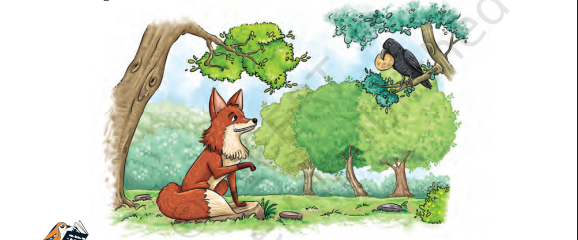
Mr Raven was perched upon a limb,
And Reynard the Fox looked up at him;
For the Raven held in his great big beak,
A morsel the Fox would go far to seek.
Said the Fox, in admiring tones: “My word!
Sir Raven, you are a handsome bird.
Such feathers! If you would only sing,
The birds of these woods would call you King.”
The Raven, who did not see the joke,
Forgot that his voice was just a croak.
He opened his beak, in his foolish pride–
And down fell the morsel the Fox had eyed.
“Ha-ha!” laughed the Fox. “And now you know,
Ignore sweet words that make you glow.
Pride, my friend, is rather unwise;
I’m sure this teaching is quite a surprise.”
Jean de La Fontaine
पूरी कविता का हिंदी अनुवाद:
श्रीमान रेवन (कौवा) एक डाल पर बैठे थे,
और रेनार्ड लोमड़ी ने ऊपर उनकी ओर देखा;
क्योंकि रेवन ने अपनी बड़ी चोंच में पकड़ रखा था
एक स्वादिष्ट टुकड़ा, जिसे पाने के लिए रेनार्ड बहुत इच्छुक था।
रेनार्ड ने प्रशंसा भरे लहजे में कहा: “बाप रे!
श्रीमान रेवन, आप तो एक सुंदर पक्षी हैं।
क्या पंख हैं! अगर आप गाना भी गाएँ,
तो इस जंगल के सारे पक्षी आपको राजा मान लेंगे।”
रेवन, जिसने इस छल को नहीं पहचाना,
भूल गया कि उसकी आवाज़ सिर्फ एक करकशा थी।
अपने मूर्ख घमंड में उसने चोंच खोल दी —
और नीचे गिरा वह टुकड़ा, जिस पर लोमड़ी की नज़र थी।
“हा-हा!” रेनार्ड हँसा। “और अब आप जान गए,
उन मीठे शब्दों को नज़रअंदाज़ कर दो जो आपको गर्वित करें।
घमंड, मेरे दोस्त, बुद्धिमानी नहीं है;
मुझे यकीन है यह सीख आपके लिए काफी हैरान करने वाली है।”
— जीन द ला फॉन्टेन
सीख:
- झूठी प्रशंसा (तारीफ़) पर कभी घमंड मत करो।
- दूसरों की चापलूसी में न आओ, वरना नुकसान उठाना पड़ सकता है।
- अपनी कमजोरियाँ पहचानो — कौवा भूल गया कि उसकी आवाज़ सुरीली नहीं है।
यह कहानी हमें तीन बड़ी सीख देती है, जो केवल पशुओं की कहानी तक सीमित नहीं, बल्कि हमारे दैनिक जीवन पर भी लागू होती है।
पहली सीख — झूठी प्रशंसा पर घमंड न करना। जब कोई अचानक बहुत अधिक तारीफ़ करने लगे, तो सतर्क हो जाना चाहिए। असली प्रशंसा विनम्र और उचित होती है, जबकि झूठी प्रशंसा अक्सर किसी स्वार्थ को पूरा करने के लिए होती है, जैसे लोमड़ी का पनीर पाना।
दूसरी सीख — चापलूसी में न आना। लोमड़ी ने कौवे की आवाज़ को “मधुर” बताया, जबकि वह जानती थी कि कौवा केवल काँव-काँव कर सकता है। चापलूसी सुनकर व्यक्ति अपना विवेक खो देता है और गलत फैसले लेता है। इससे नुकसान होने की संभावना रहती है।
तीसरी सीख — अपनी कमजोरियों को पहचानना। कौवे ने यह भूला दिया कि उसकी आवाज़ सुरीली नहीं है। यदि वह अपनी वास्तविकता जानता और उसे स्वीकार करता, तो लोमड़ी उसे बेवकूफ न बना पाती। स्वयं की सीमाओं को समझना आत्मविश्वास का हिस्सा है, न कि कमजोरी।
इस प्रकार, यह कहानी हमें सिखाती है कि बाहरी दिखावे और झूठी प्रशंसा से प्रभावित हुए बिना, अपनी वास्तविकता को पहचानकर ही सही निर्णय लेने चाहिए।
Let us discuss
I Fill in the blanks by choosing the correct option.
1. Stanza 1
(i) Mr Raven is a __________. (bird/frog)
(ii) The name of the fox is __________. (Raven/Reynard)
(iii) Mr Raven had __________ in his beak. (a piece of food/ a bunch of
leaves)
2. Stanza 2
(i) The Fox calls the Raven a __________ bird. (foolish/good-looking)
(ii) The Fox asks the Raven to __________. (dance/sing)
(iii) The Raven and the Fox live in the __________. (trees/woods)
3. Stanza 3
(i) The Raven ___________ that he croaked. (remembered/forgot)
(ii) The Raven opened its beak to ___________. (eat/sing)
(iii) The ___________ fell down. (food/Raven)
4. Stanza 4
(i) The Fox ___________ at the Raven. (laughed/looked)
(ii) It is not ___________ to be too proud of oneself. (wise/unwise)
(iii) The Raven learnt a ______________. (lesson/teaching)
Stanza 1
(i) Mr Raven is a bird.
(ii) The name of the fox is Reynard.
(iii) Mr Raven had a piece of food in his beak.
Stanza 2
(i) The Fox calls the Raven a good-looking bird.
(ii) The Fox asks the Raven to sing.
(iii) The Raven and the Fox live in the woods.
Stanza 3
(i) The Raven forgot that he croaked.
(ii) The Raven opened its beak to sing.
(iii) The food fell down.
Stanza 4
(i) The Fox laughed at the Raven.
(ii) It is not wise to be too proud of oneself.
(iii) The Raven learnt a lesson.
II. Read the poem again and match the words in Column A with their
meanings in Column B. Check your answers with your teacher and
classmates.
Column A Column B
1. perched (i) a small piece of food
2. morsel (ii) looked with interest at something
3. seek (iii) feeling that you are better than others
4. pride (iv) sat on a branch
5. eyed (v) to look for something
6. limb (vi) a smaller area of forest with similar kind of trees
7. woods (vii) branch of a tree
Match the words:
- perched – (iv) sat on a branch
- morsel – (i) a small piece of food
- seek – (v) to look for something
- pride – (iii) feeling that you are better than others
- eyed – (ii) looked with interest at something
- limb – (vii) branch of a tree
- woods – (vi) a smaller area of forest with similar kind of trees
II Read the following lines and answer the questions that follow.
1. Sir Raven, you are a handsome bird.
Such feathers! If you would only sing,
The birds of these woods would call you King
(i) ‘Such feathers’ refer to — A. shiny and beautiful
(The fox is flattering the raven, describing him as handsome, so “such feathers” means attractive ones.)
(ii) Why would the birds of the woods call the Raven ‘King’?
The fox says that if the raven sings, his voice would be so beautiful that all the birds would consider him the king—this is flattery to trick him.
(iii) Why does the Fox address the Raven as ‘Sir’?
To show false respect and make the raven feel important and more willing to believe the flattery.
II.
(i) Why did the Raven open his beak?
He opened his beak to sing, because his foolish pride made him believe he had a beautiful voice, and he wanted to prove it.
(ii) Fox : clever : : Raven : ______________
foolish
(From the line: “in his foolish pride”)
III. Why does the Raven forget that his voice is just a croak?
He forgets because he is carried away by the fox’s flattery and his own pride. He wants to believe he is as talented and handsome as the fox says.
IV. How does Reynard make the Raven sing?
By praising his looks and suggesting that if he sang, he’d be the king of the birds—playing on the raven’s vanity.
V. Why does Reynard say that pride is not wise?
Because pride makes one overconfident and careless, causing them to make foolish mistakes—just like the raven losing his food.
VI. Give one reason why the teaching is quite a surprise.
The raven did not expect to be tricked; he thought he was being genuinely admired, so the lesson about not trusting false praise comes as a shock.
VII. Imagine someone praises you too much. How would you react?
I would stay cautious and not let it affect my judgment. I would thank them politely but not change my actions just to impress them, remembering that too much praise can sometimes be insincere.